
Everyday etiquette in Japan: trains, meals, gifts, homes, trash, and baths
Understand the everyday logic behind quiet trains, itadakimasu, chopsticks, gifts, shoe removal, local trash rules, and onsen manners.
The basic logic behind many Japanese manners is meiwaku o kakenai: do not create trouble for others. That idea explains quiet trains, waiting lines, gift returns, shoes at the entrance, local trash rules, and shared baths.
Trains and public space
Do not take phone calls on commuter trains such as JR Yamanote Line or Tokyo Metro. Messaging is normal, but voice calls are treated as intrusive; if a call is urgent, say you will call back and get off at the next station.
Eating is also limited. Drinking 500 ml bottled water or tea quietly is usually fine, but burgers, boxed meals, snacks, and open coffee are poor form on subway and commuter trains. Shinkansen and long-distance limited express trains are different because ekiben is part of the trip.
Priority seats are for older people, pregnant passengers, injured passengers, disabled passengers, and people with small children. In crowded cars, move a backpack to the front. Escalator customs differ by region, with Tokyo traditionally standing left and Osaka right, though rail operators have promoted standing on both sides since 2021.
Meals and chopsticks
Say “itadakimasu” before eating and “gochisosama deshita” after finishing, whether the meal is a ¥700 set lunch or a ¥20,000 course. The phrases mark gratitude for food, preparation, and the person who served it.
Avoid the most visible 5 chopstick mistakes at sushi counters, izakaya, or a ¥1,000 teishoku meal: sticking chopsticks upright in rice, passing food from chopsticks to chopsticks, licking chopsticks, pointing with them, or placing them across a shared plate. Use serving chopsticks when they are available.
At izakaya or company drinking meals, people often pour for each other rather than filling their own glass first. Hold the glass with both hands when someone senior or a host pours, and use “kanpai” only for the first toast.
Gifts and visits
Souvenirs and small gifts keep relationships balanced. Travel omiyage often costs ¥500 to ¥2,000 and should be individually wrapped if it is for an office. A house-visit gift often sits around ¥1,500 to ¥3,500.
Formal gift money has stronger rules. Wedding gifts are often ¥30,000 for a friend, while condolence money may be ¥5,000 to ¥10,000 depending on the relationship. Return gifts often run about 1/2 to 1/3 of the received value.
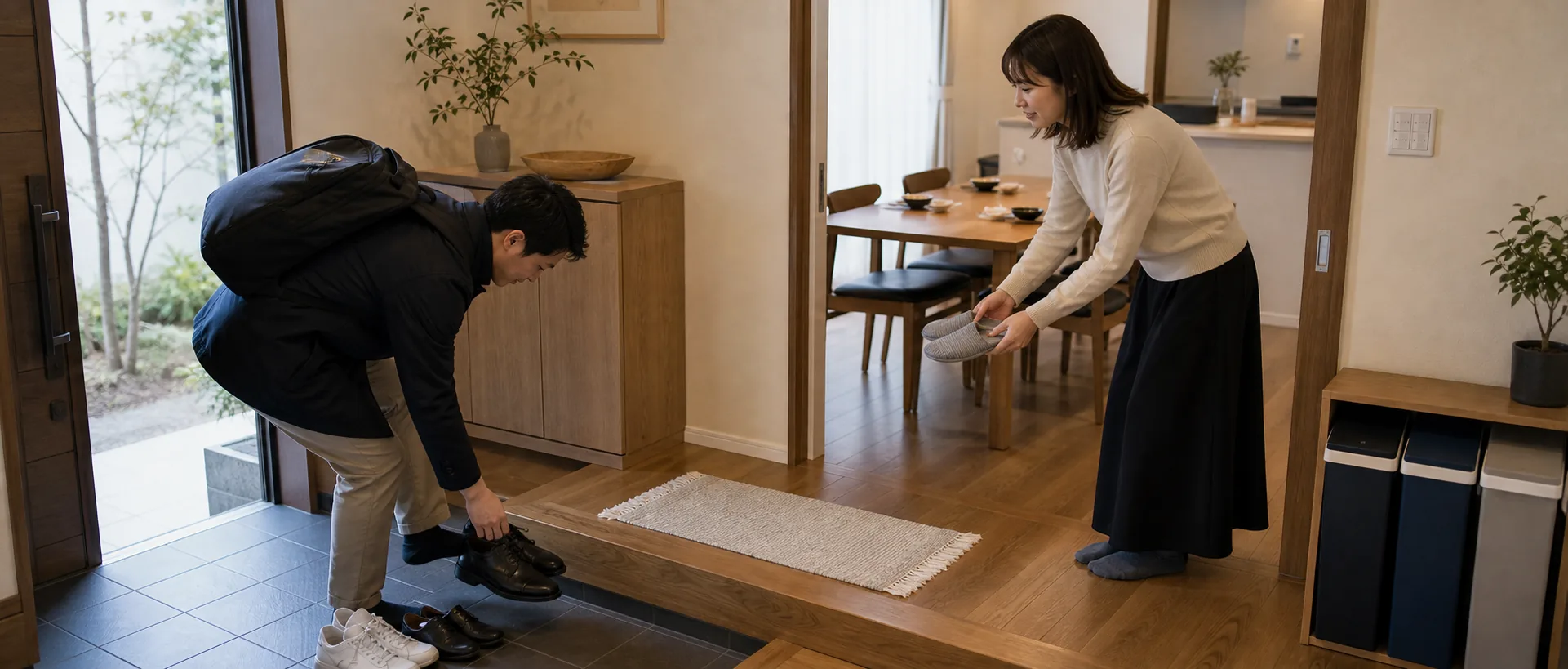
When visiting a home, arrive about 5 minutes early, not 20 minutes early. Remove shoes in the genkan, turn them neatly toward the door, use toilet slippers only in the toilet, and take a gift out of the paper shopping bag before handing it over.
Trash, onsen, and baths
Trash rules are municipal, so check the city or ward calendar within 24 hours of moving. Common categories include burnable, non-burnable, recyclables, and oversized trash. Oversized items over about 30 cm often require booking and a paid sticker of roughly ¥300 to ¥3,000.
Many municipalities require designated bags sold locally, often around ¥200 to ¥800 for a pack of 10. Putting trash out on the wrong day can leave it uncollected with a warning sticker.
At onsen and sento, wash fully before entering the bath and check the posted rules near the 1st doorway. Do not put towels in the water, do not use soap in the tub, and check tattoo rules before entering. Some bathhouses now accept tattoos, but many still restrict them.
Common mistakes
Do not hand over the whole Mitsukoshi or Takashimaya paper shopping bag during a home visit unless the host tells you to. The bag protects the gift; the gift is what you present.
Do not wear toilet slippers back into the living room or tatami room. This is one of the fastest ways to show that you missed the house boundary in a Japanese home.
Do not bring home trash habits into a new city. A move from Tokyo to Osaka, Kyoto, or Sapporo can change bag colors, collection days, plastic rules, and oversized-item booking.
Useful terms
- meiwaku o kakenai
- itadakimasu
- omiyage
- noshigami
- genkan
- gomi bunbetsu