
Before Arrival in Japan: Documents and First-Month Checklist
Prepare residence documents, money, transport, connectivity, insurance, and safety information before landing.
The priority before moving is anything difficult to recover after landing. Prepare official documents 1 to 2 months ahead, cash and connectivity 1 to 2 weeks ahead, and airport documents on the day of travel.
1 to 2 months before departure
Confirm passport validity, COE, visa, school or employer documents, and any family documents. A COE is usually handled in Japan by the school, company, or family sponsor through ISA, and it can take 4 weeks to 3 months. After the COE arrives, the visa at the Japanese embassy or consulate often takes 1 to 2 weeks.
Prepare birth certificate, family register extract, marriage documents, graduation certificate, transcript, police certificate, or notarized documents if your school, employer, scholarship, marriage registration, or daycare process may need them. These can take 1 to 2 months in your home country.
Medicine and driving
For prescription medicine, Japan generally allows only a limited personal amount without extra paperwork. If you bring more than about 1 month of prescription medicine, check the MHLW import confirmation process before travel.
If you plan to drive, prepare an International Driving Permit or license translation before leaving your country, depending on your license jurisdiction. You usually cannot obtain your home-country international permit after arriving in Japan.
1 to 2 weeks before departure
Prepare JPY 200,000 to 500,000 for the first 1 to 2 months, including food, transport, hotel, deposits, and apartment initial costs. Carry small bills as well as JPY 10,000 notes. Bring 1 or 2 Visa or Mastercard cards, but do not rely only on overseas cards.
Book the first stay for at least 1 week, and often 1 month if you must search for housing. Apartment viewing, guarantor screening, contract, and key handover can take 2 to 4 weeks. Confirm dormitory or company housing move-in rules before the flight.
Connectivity and arrival apps
Arrange a SIM, eSIM, or Wi-Fi router before landing. Services such as Sakura Mobile, Mobal, and other visitor or resident SIM providers can cover the first days, often around JPY 3,000 to 5,000 per month. A Japanese phone number helps with banking, housing, and delivery.
Download Google Maps, Google Translate with Japanese offline data, Yahoo! Transit, JR East or regional railway apps, PayPay, and weather or disaster apps before the flight. Mobile Suica or PASMO can work on supported phones, but foreign-card charging can fail, so prepare cash backup.
Arrival-day carry-on
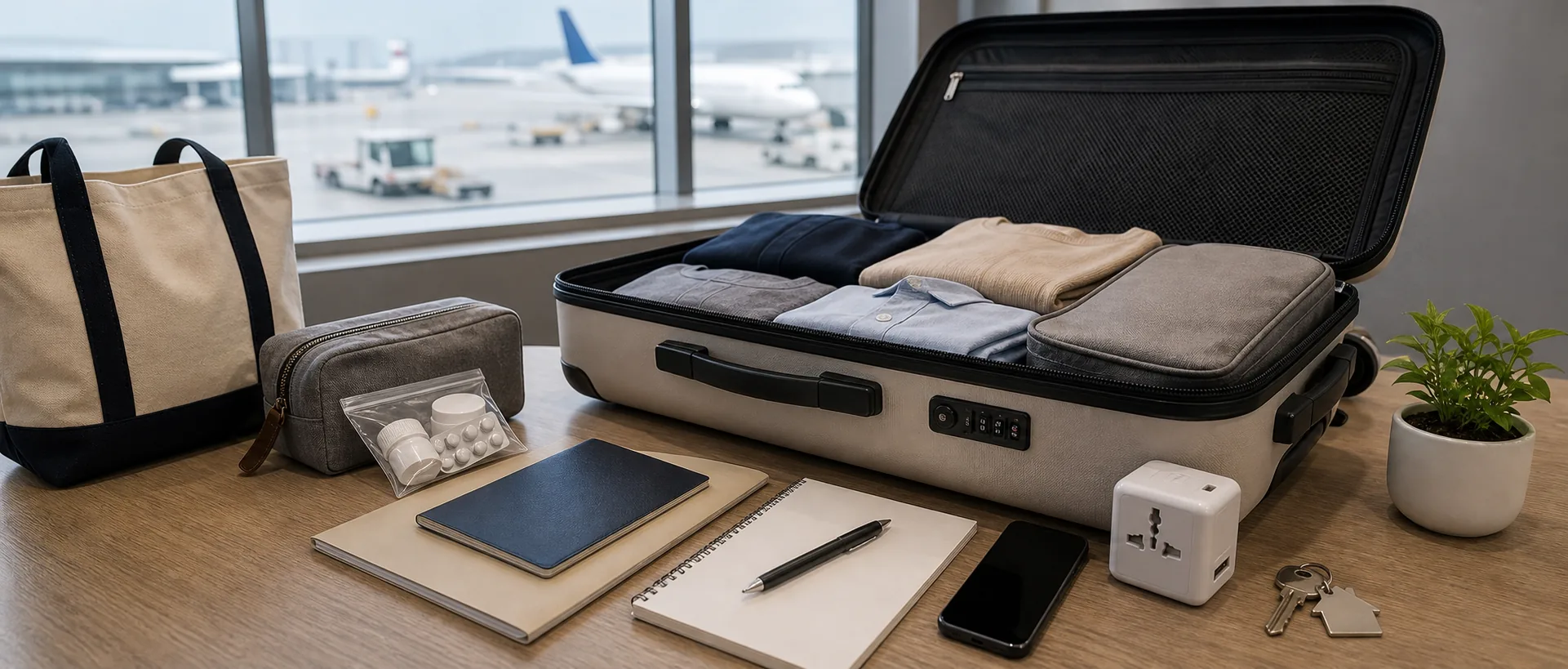
Keep passport, visa, COE copy, residence documents, school or company papers, family documents, license documents, 1 week of medicine, laptop, chargers, power bank, cards, and JPY 10,000 to 30,000 in carry-on luggage.
At customs, cash over JPY 1,000,000 must be declared. At major airports, long-term entrants may receive a residence card immediately. After landing, your next legal anchor is the municipal move-in notice within 14 days after deciding the address.
Second day to first week
Once the address is fixed, file the municipal move-in notice within 14 days and have the address written on the back of the residence card. At the same office trip, check the resident record, My Number notice route, National Health Insurance, National Pension, and seal registration; a resident record copy is often about JPY 300.
During the first month, arrange a practical bank account such as Japan Post Bank, a Japanese phone number, rental contract, electricity, gas, water, and internet. Megabanks may be difficult for residents with less than 6 months in Japan, and gas opening plus fiber internet often require booked appointments.
Useful terms
- COE: Certificate of Eligibility
- Kokusai unten menkyo: International Driving Permit
- Yakkan shomei: import confirmation for medicine
- Tennyu todoke: move-in notification
- Jitsuin toroku: registered seal registration