Kyoto transit: buses, subway, JR, and private railways
Use Kyoto's 2 subway lines, city buses, JR, Hankyu, Keihan, Kintetsu, taxis, and bicycles without losing time in peak-season crowds.
Kyoto’s transport problem is not a lack of vehicles. The problem is that the subway has only 2 lines, buses cover too much, and spring or autumn traffic can turn a 15-minute ride into 40 minutes.
Subway
Kyoto Municipal Subway has the Karasuma Line running north-south and the Tozai Line running east-west. They cross at Karasuma Oike, which is the main subway transfer point.
The Karasuma Line is fastest from Kyoto Station to Shijo, Karasuma Oike, Kitaoji, and Kokusaikaikan. Kyoto Station to Shijo takes about 3 minutes and costs around ¥220.
The Tozai Line is useful for Nijojo-mae, Higashiyama, Keage, and Daigo. Higashiyama works for Yasaka Shrine and Chion-in, while Keage works for Nanzenji and the Philosopher’s Path.
City buses
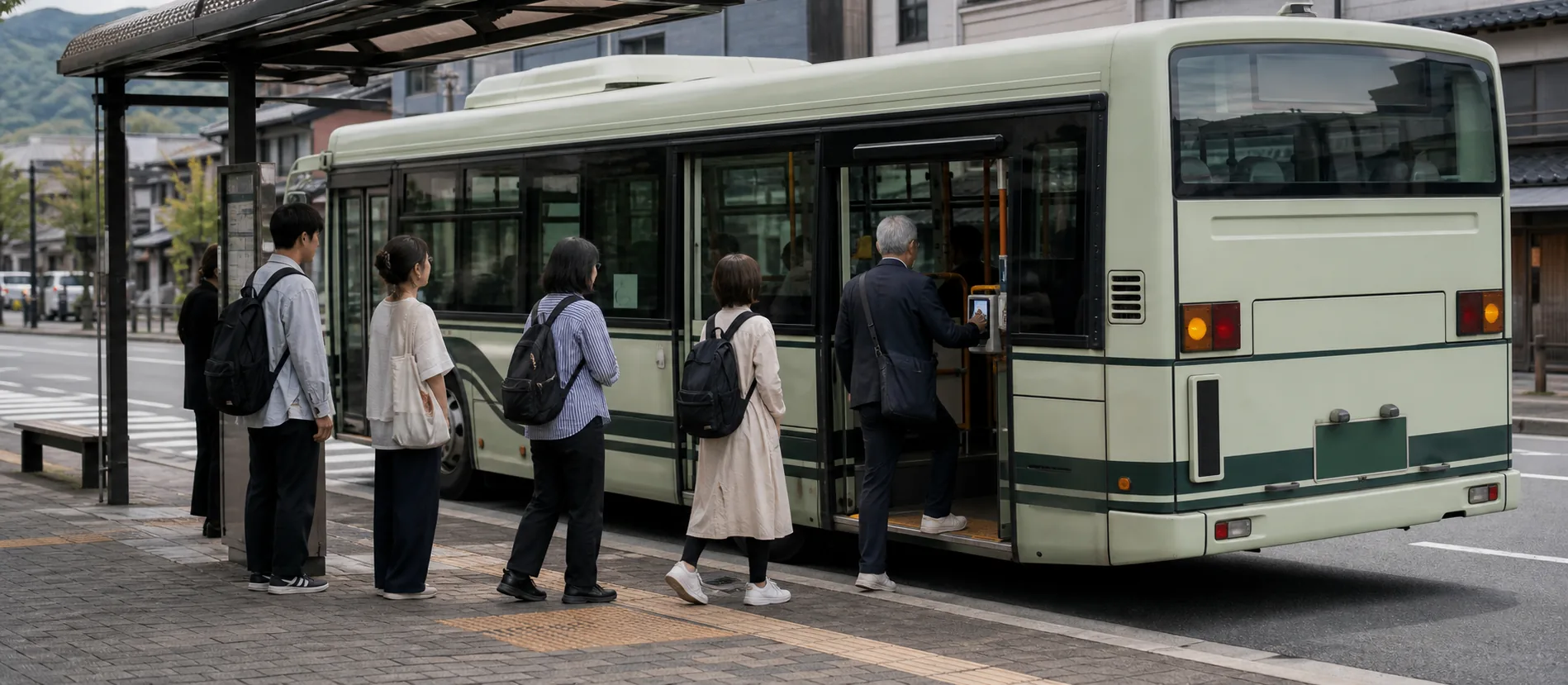
Kyoto City Bus has about 80 routes and reaches many places the subway misses. The flat central fare is around ¥230. The old ¥700 city-bus one-day pass was discontinued to ease overcrowding (sales ended September 2023, no longer usable from April 2024), so the current day-pass options are the ¥1,100 subway-and-bus pass or the ¥800 subway-only pass.
The problem is crowding. Routes toward Kiyomizudera and Kinkakuji can be full from 10:00 to 15:00 in spring and autumn, and traffic on Shijo-dori or Higashioji-dori slows badly.
For Kiyomizudera, consider the Tozai Line plus walking, or get off at Gojozaka and accept the uphill route. For Kinkakuji, take the Karasuma Line to Kitaoji and transfer to route 205 for the short final segment. For Arashiyama, use the JR Sagano Line from Kyoto Station in about 16 minutes.
JR and private railways
JR is better than buses for Fushimi Inari and Arashiyama. From Kyoto Station to Inari Station on the Nara Line is 2 stops and about ¥150, and the shrine entrance is directly outside the station.
Hankyu Kyoto Line connects Kyoto-kawaramachi with Osaka Umeda in about 43 minutes for around ¥400. Keihan Main Line runs along the east side of the Kamo River from Demachiyanagi and Gion-shijo toward Osaka Yodoyabashi in about 51 minutes. Kintetsu connects Kyoto Station with Nara in about 45 minutes by express.
Hankyu and Keihan both use “Shijo” in station names, but they are not the same station. The walk between them around Shijo-Kawaramachi and Gion-shijo is about 5 minutes.
Passes, taxis, and bicycles
The ¥1,100 subway-and-bus one-day pass is useful when crossing areas such as Higashiyama and Kinkakuji, and the ¥800 subway-only pass suits subway-heavy days. The bus-only one-day pass no longer exists, so for heavy bus travel rely on an IC card or the combined pass.
Kyoto taxis start around ¥500 to ¥600 for short distances. For 4 people, Kyoto Station to Gion at roughly ¥1,200 to ¥1,500 can be reasonable outside the worst traffic.
Bicycles work well in the flat center, with rentals around ¥1,000 to ¥1,500 per day. Do not park randomly; Kyoto removes illegally parked bicycles, and you should use a paid churinjo.
Useful terms
- Karasuma Line
- Tozai Line
- Kyoto City Bus
- Hankyu Kyoto Line
- Keihan Main Line
- churinjo