
Tea and Sweets in Japan: Seasonality, Hospitality, and Craft
Understand tea, wagashi, ceremony, gift culture, and craft context before choosing experiences or gifts.
Tea and wagashi are practical choices before they are cultural labels: what season is it, who will receive the gift, how long must it keep, and how bitter or sweet should the pairing be. A department-store counter, a tea ceremony room, and a neighborhood confectioner answer those questions in different ways.
Wagashi by type and price
Yokan travels well and is common as a formal gift; a good small box often sits around ¥1,000 to ¥3,000. Monaka is lighter and fragile, usually ¥150 to ¥300 per piece, and famous shops may require advance reservation. Dorayaki is casual and easy to share, with many Tokyo shops around ¥240 to ¥420 per piece.
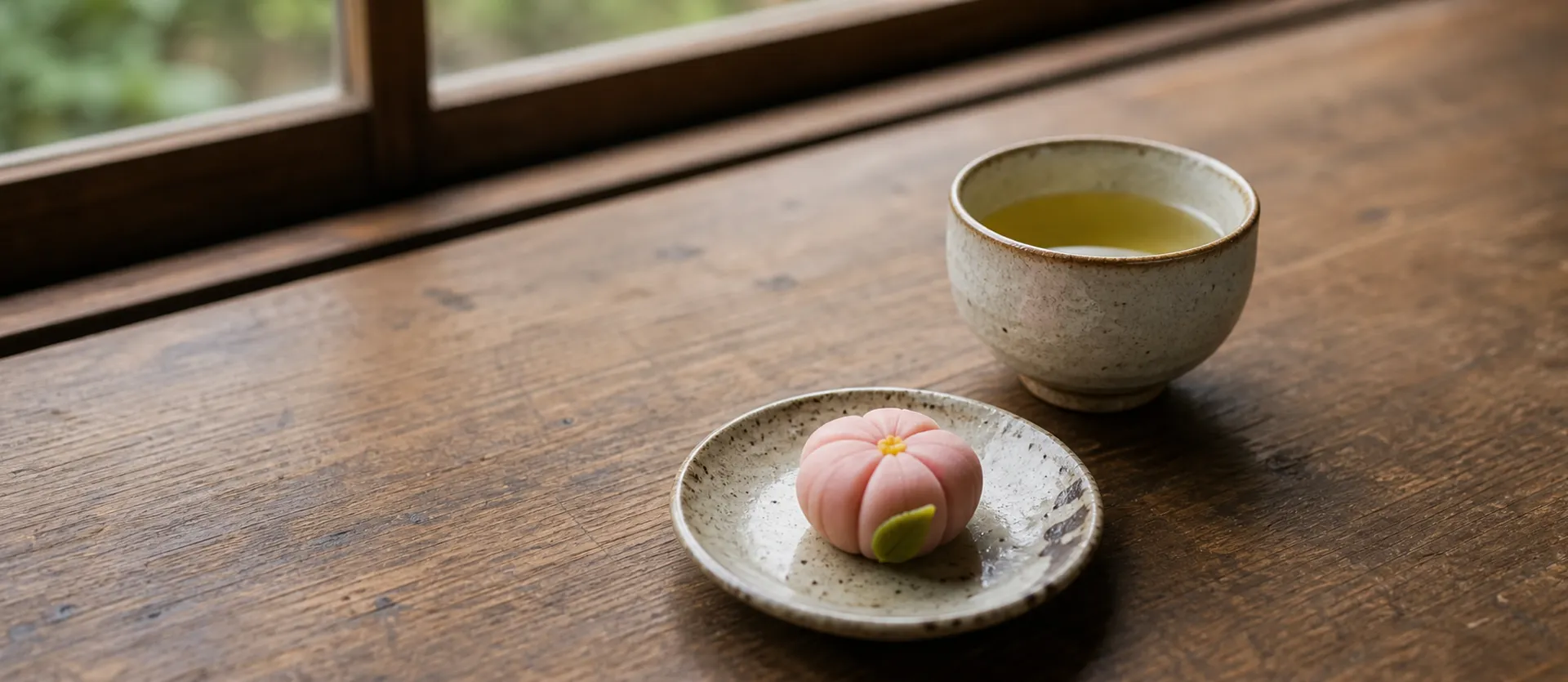
Daifuku is better eaten quickly, especially strawberry daifuku in winter, often around ¥350 to ¥600. Dango can be a ¥100 to ¥200 street snack. Namagashi for tea ceremony is more seasonal and delicate, commonly around ¥400 to ¥800 each. Castella from long-running Nagasaki-style makers is a safer boxed gift when shelf life matters.
Tea changes with temperature
Matcha usually uses about 2 g powder and 60 to 80 ml water around 70 to 80 C. Sencha is more forgiving: about 3 g leaves, 80 to 90 C water, and roughly 1 minute for the first infusion. Gyokuro asks for lower heat, often 50 to 60 C, more leaf, and 2 to 3 minutes; good Uji gyokuro can cost ¥2,000 to ¥10,000 per 100 g.
Hojicha takes hotter water, around 95 C, and a shorter steep. Genmaicha is useful with meals because the roasted rice softens bitterness. Mugicha is the everyday summer drink, served cold at 5 to 15 C rather than treated like formal tea.
Season decides the sweet
Sakura mochi belongs to late winter and spring, roughly February to April depending on region. Minazuki appears around June 30 in Kyoto customs. Mizu yokan is a July and August sweet because cold texture matters more than ceremony. Tsukimi dango points to autumn moon-viewing, while kuri kinton and chestnut sweets mark the deeper autumn calendar.
Winter brings hanabira mochi for New Year tea settings. Momiji-shaped sweets and maple-leaf packaging appear in autumn travel zones such as Hiroshima and Kyoto. The sweet is often a calendar note: it tells you what month the shop thinks it is.
Choosing gifts without overdoing it
For a supervisor or formal host, yokan or a department-store wagashi box around ¥2,000 to ¥3,000 is safer than an experimental flavor. For friends, 6 dorayaki or assorted monaka around ¥1,500 to ¥2,200 feels easier to open. For wedding return gifts or formal family visits, boxed sweets around ¥2,500 to ¥4,000 are common.
Ask about wrapping, shelf life, and whether a noshi paper is appropriate. If the recipient will travel 2 hours by train, avoid cream, fresh fruit, and anything that must stay cold. At depachika counters, tell staff the date, number of people, and whether the gift is for work, family, or casual thanks.
Tea rooms and casual shops
A formal tea ceremony experience can be around ¥800 to ¥3,000 for a brief tourist-friendly session, while a tea house set with matcha and namagashi may be ¥1,500 to ¥3,500. Sit-down service often includes the rhythm of ordering, waiting, receiving the sweet first, then drinking tea.
In casual cafes, the rule is simpler: do not compare every matcha dessert to ceremony tea. A matcha latte, parfait, shaved ice, and usucha bowl are different products. The question is not which one is “authentic”; it is whether the shop is selling tea practice, confectionery craft, cafe comfort, or a souvenir.
Useful terms
- fresh sweet: 生菓子
- yokan: 羊羹
- roasted green tea: ほうじ茶
- powdered tea: 抹茶
- gift wrapping paper: のし