
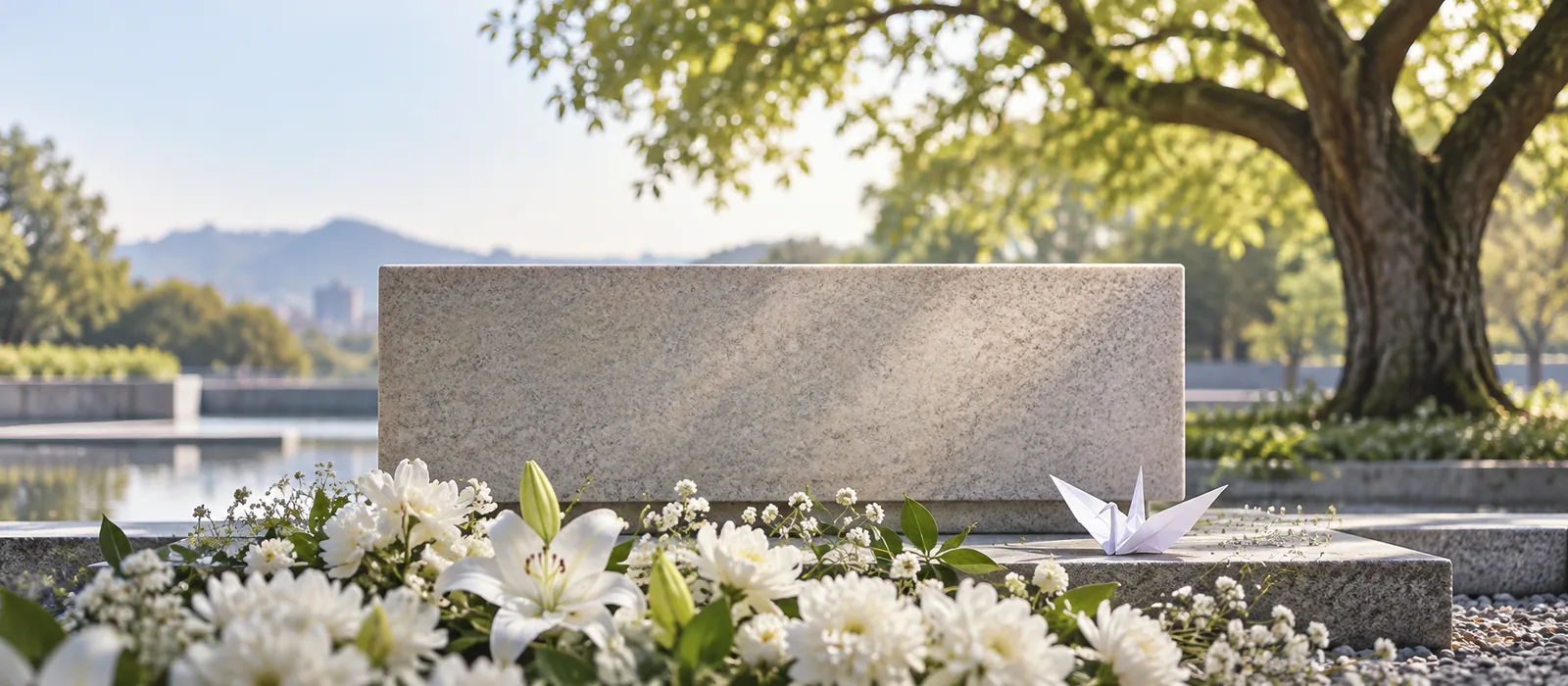
War and Postwar Japan: From the Manchurian Incident and the War in China to the Atomic Bombs, Occupation, a New Constitution, and the 1964 Tokyo Olympics
The Manchurian Incident of 1931 and the Marco Polo Bridge Incident of 1937 led to full-scale war in China, the Pacific War began in 1941, and Japan surrendered in 1945 after the Tokyo air raids, the Battle of Okinawa, and the atomic bombings of Hiroshima and Nagasaki. After the US-led occupation, the 1947 constitution, the restoration of sovereignty in 1952, and both Okinawa's return and normalized relations with China in 1972, the 1964 bullet train and Tokyo Olympics symbolized the high-growth era. The Hiroshima Peace Memorial Museum, the Nagasaki Atomic Bomb Museum, and Okinawa's Peace Memorial Park can all be visited.
ARTICLE MAPReading Map
SERIESJapanese HistoryFrom the eras overview to single events, each tied to places you can still visit.8 parts
Start here
Classical and medieval
Sengoku and Edo
Modern era
War and postwar
- 08War and postwar
The wars of the early Showa period and the rebuilding after them are essential to understanding Japan today. The current constitution, the alliance with the United States, the US bases in Okinawa, and the gap in historical memory with China and Korea all come from here, and for people in China and the Korean Peninsula this is close history too. The sections below follow events in order, rely on official statements of the Japanese government and local governments for figures and assessments, and point to memorial sites you can visit.
From the Manchurian Incident to full-scale war in China (1931 to 1937)
After the Russo-Japanese War, Japan held rights including the South Manchuria Railway. On September 18, 1931, the Kwantung Army stationed there blew up a section of track at Liutiao Lake outside Mukden (today’s Shenyang), blamed Chinese troops, and launched military operations. Japan calls this the Manchurian Incident; in China it is known as the September 18 Incident. In 1932 Japan set up the state of Manchukuo, which the League of Nations refused to recognize, and Japan left the League in 1933.
On July 7, 1937, Japanese and Chinese troops clashed at the Marco Polo Bridge outside Beiping, and the fighting grew into full-scale war, the Second Sino-Japanese War, known in China as the War of Resistance against Japan. In December that year the Japanese army took Nanjing. The position of Japan’s Ministry of Foreign Affairs is that the killing of non-combatants and looting after the Japanese army entered Nanjing cannot be denied, but that there are many views on the actual number of victims and the government finds it difficult to determine which is correct.
Source: Ministry of Foreign Affairs: history issues Q&A (Nanjing).
The Pacific War and defeat (1941 to 1945)
As the war in China dragged on, Japan pushed into Southeast Asia for resources, and relations with the United States and Britain deteriorated fast. On December 8, 1941 (Japan time), Japan attacked Pearl Harbor in Hawaii, starting the Pacific War. The tide turned after the Battle of Midway in 1942.
In 1945 the war brought huge losses to Japan itself. In the early hours of March 10, US bombers dropped vast numbers of incendiaries on the crowded working-class districts of eastern Tokyo, killing about 100,000 people in the Tokyo air raid. From April to June, the Battle of Okinawa was one of the largest ground battles fought on Japanese soil, after the fighting on Iwo Jima in February and March, and many residents were caught up in it; Okinawa’s Cornerstone of Peace bears 242,659 names as of June 23, 2026, regardless of nationality or whether they were soldiers or civilians. Atomic bombs were dropped on Hiroshima on August 6 and Nagasaki on August 9, and by the two cities’ estimates about 140,000 people in Hiroshima and about 74,000 in Nagasaki had died by the end of December 1945. On August 15 Emperor Showa announced on the radio that Japan accepted the Potsdam Declaration, and the instrument of surrender was signed on September 2.
In 1995, on the 50th anniversary of the war’s end, Prime Minister Murayama Tomiichi stated that Japan, “through its colonial rule and aggression, caused tremendous damage and suffering to the people of many countries, particularly to those of Asian nations”, expressing deep remorse and a heartfelt apology, and later cabinets have said they uphold this position.
Sources: Ministry of Foreign Affairs: Murayama Statement (1995), Hiroshima City: the reality of the atomic bomb damage, 「平和の礎」刻銘者数一覧(令和8(2026)年6月23日現在).
Occupation, a new constitution, and restored sovereignty (1945 to 1972)
After defeat, Japan was occupied by the General Headquarters of the Supreme Commander for the Allied Powers (GHQ), led by the United States. The occupation disbanded the military, carried out land reform, broke up the zaibatsu conglomerates, and gave women the vote. The Constitution of Japan was promulgated on November 3, 1946, and took effect on May 3, 1947. It established popular sovereignty and the emperor as a symbol, and Article 9 renounces war and the maintenance of armed forces. Both dates are now public holidays, Culture Day and Constitution Memorial Day.
The San Francisco Peace Treaty, signed in 1951, took effect on April 28, 1952, restoring Japan’s sovereignty, and the Japan-US Security Treaty was signed at the same time. Okinawa stayed under US rule until it was returned to Japan on May 15, 1972, and about 70% of the facilities used exclusively by US forces in Japan are still concentrated there.
On September 29 of the same year, the Japan-China Joint Communique normalized relations between the two countries. With South Korea, Japan had signed the Treaty on Basic Relations in 1965.
Source: National Diet Library: birth of the Constitution of Japan.
High growth and the 1964 Tokyo Olympics
With sovereignty restored, Japan entered its era of rapid economic growth, usually dated from around 1955 to the 1973 oil crisis, with real growth averaging around 10% a year. Home appliances and cars spread, and large numbers of people moved from the countryside to the cities.
Tokyo Tower was completed in 1958. On October 1, 1964, the Tokaido Shinkansen opened between Tokyo and Shin-Osaka, and on October 10 the Tokyo Olympics began, two events often seen as marking the completion of postwar recovery. Osaka hosted the World Expo in 1970. Tokyo Tower, the Shinkansen, and Tange Kenzo’s Yoyogi National Gymnasium are all still in use.
Memorial sites to visit
This history is remembered at memorials and museums around the country, through the belongings and testimony of the victims.
The Hiroshima Peace Memorial Museum’s permanent exhibition costs JPY 200 for adults. It opens at 7:30 and closes between 18:00 and 20:00 depending on the season, and some early-morning and evening slots require online booking. The neighboring Atomic Bomb Dome became a World Heritage site in 1996. The Nagasaki Atomic Bomb Museum costs JPY 200 for adults, from 8:30 to 17:30 (to 18:30 from May to August). Peace Memorial Park at Mabuni in Itoman, Okinawa, holds the Cornerstone of Peace and the Okinawa Prefectural Peace Memorial Museum, which costs JPY 300 for adults. In Tokyo, the victims of the air raids are honored at the Tokyo Memorial Hall in Yokoamicho Park; see the Great Kanto Earthquake.
Sources: Hiroshima Peace Memorial Museum, Nagasaki City: Nagasaki Atomic Bomb Museum, Okinawa Prefecture: Peace Memorial Park.
Common misunderstandings
Last, a few points that are often confused.
The first is thinking Japan’s war began at Pearl Harbor in 1941. What Japanese people usually call the Pacific War covers only 1941 onward; the war with China ran from 1931 and became full-scale in 1937.
The second is assuming the Japanese government denies the Nanjing Massacre. The Foreign Ministry’s official position is that the killing of non-combatants and looting cannot be denied; the dispute is over the number.
The third is thinking the Battle of Okinawa was fought only between armies. Many residents were caught up in it and civilian deaths were enormous, which is why Okinawa holds its Memorial Day on June 23.
The fourth is believing Japan wrote its current constitution on its own after independence. It was adopted during the occupation, based on a GHQ draft and passed by the Imperial Diet, and whether to amend it remains a long-running question in Japanese politics.
Useful terms
- Manshu jihen: the Manchurian Incident
- Nitchu senso: the Second Sino-Japanese War
- Okinawa-sen: the Battle of Okinawa
- Nihonkoku kenpo: the Constitution of Japan
- Kodo keizai seicho: the high-growth era